
Babies and Children

Osteopathic treatment

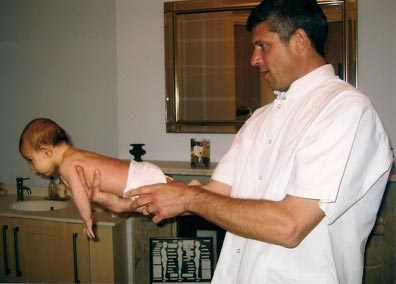
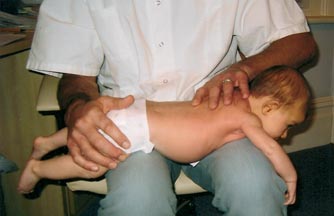
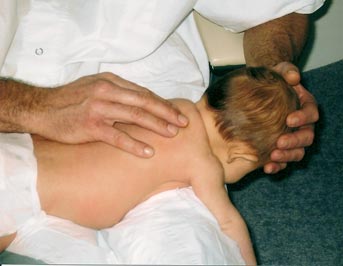
Treatment for babies and children is adapted to suit the needs of the young body. The advantage of treating conditions in childhood is that their bodies have such a healing reserve and capacity to accept change that amazing results can be obtained in a short period of time.

Correcting strains early in life from injuries and falls not only prevents early degeneration it frees your child to reach their full potential as an adult. Our osteopaths are trained to treat babies and children with structural and cranial osteopathy.

Birth is one of the most stressful events of our lives!
So the common notion that babies and children shouldn’t have any problems of stress and strain as they’re so young isn’t further from the truth!

The pressure that is exerted on a babies head as the uterus pushes down during a contraction is the equivalent to a tonne weight pushing down! That coupled with how the baby has to twist and turn inside the bony pelvis leads to a very stressful delivery! And that is for a completely natural birth with no problems!


A babies head is designed to absorb these stresses and pressures by having the capacity to be m

oulded during delivery. The cranial bones in the head are not fused and they are able to overlap and bend to enable the head to squeeze through the small bony pelvic outlet.

The baby if in optimum position should tuck its chin onto its chest to reduce the diameter of the head. However this doesn’t always happen and strain in the neck and base of the head can result.

Almost all babies are born with a degree of cranial moulding (pointed heads / disfigured faces and heads) this usually disappears within a few hours or days. Yawning, suckling and crying will help with regaining the normal cranial alignment, although a complete reversal rarely happens if it has been a difficult birth.

The tensions that built up within the membranes can still be present even when the head looks to be of normal shape. This can leave the baby with physically uncomfortable stresses and strains within the

head and body. If left untreated these can manifest into physiological disorders. Our treatment is designed to give a baby / child a full check of their body, spine and cranium.


Common conditions we can help with babies

Feeding difficulties

We can help with long feeds due to difficulty suckling, as the nerve which supplies the face, mouth and throat is commonly compressed in the neck or the base of the skull during birth; this can cause continual irritation of the nerve and affects its functioning. A cause of this is when the cord is tight around the baby’s neck, or from a long labour or interventionist birth (forceps, caesarean or ventouse). Treatment will aim to release and balance tensions within the cranium and spine, reduce muscle contracture / spasm within the neck.


Colic, wind, reflux, evening crying

Can all occur in a completely normal and healthy baby – However it is common for the nerve to the stomach to be irritated which leads to digestive dysfunction. This can occur in a number of ways,

1) The nerve passes through the neck on its way to supplying the stomach, any tension or tightness within the neck muscles (which is very common after birth) will compress this nerve and affect its functioning.

2) The nerves to the stomach, intestines and colon, exit the spinal cord through vertebrae in the thoracic and lumbar spine.

Often there are small twists in the baby’s spine as a result of how they were positioned whilst in the uterus. A side-bending curve is common through the mid-lower thoracic spine into the lumbar spine, this causes a shortening of the inter-vertebral muscles one side of the spine which will then compress these nerves and not allow them to function properly. Digestive function then becomes impaired and wind will build. These problems are very easily dealt with in the early stages by gentle articulation and massage.

WindMay in addition to the above also be caused by a stressful birth. The tension from this can cause trapped wind. Also the stress from the birth will have over stimulated the babies sympathetic nervous system (SNS) – the fight or flight response! This response causes blood to be diverted from the abdomen to the muscles of the legs and arms, this is not necessary for the baby and a prolonged stimulus of the SNS due to birth trauma will lead to a reduction of blood to the abdomen which inhibits healthy digestion.

We can help with this by releasing the tensions around the area where the sympathetic nerves exit the spine so they are no longer irritated, and this will help the abdominal blood supply to normalise.

Colic and digestive disorders can also be aggravated by stress through the umbilical cord i.e. if the baby had the cord around its neck there will be a great strain through to its abdomen causing stress and irritation; we can help to release this.

Sleeplessness

Some babies just don’t sleep! However there is hope!

This can also be the result of Sympathetic nerve irritation (see above) where areas of the spine have twists or contracted muscles compressing the nerves. The SNS when active will not allow a relaxed sleep. The baby will only sleep when exhausted and then only for short periods.

Irritable tensions within the membranes that surround the cranial (skull) bones will also cause an irritation to the SNS.

Gentle balancing of the cranial bones and release of any tight muscles and rebalance of the spine will reduce the irritation to these nerves.


Mis-shaped head (Retained mouldings)

Baby’s cranial bones are not fused together; this allows them to overlap during the birth to allow the head to be delivered. They should then return to their rightful place but in many cases do not. This if left untreated may lead to an uneven shaped head. Many children may seem unaffected by this but it can lead to problems in the future if excessive tensions become chronic.

Tips for avoiding this condition are to allow the baby as much tummy time as they will allow right from birth. This will take the pressure off the back of the head and allow it to continue its repositioning.

Also suckling and crying are babies own ways of releasing pressure within their cranium!


Interventionists births

Forceps The force applied to a babies’ cranium, coupled with being pulled at the same time by forceps commonly leads to cranial bone overlap and retained compression within the membranes of the skull. This can affect muscles and nerve functions and cause a headache which is worse when lying down as the pressure is on the head. We recommend a check up for baby if they have had a forceps delivery as in most cases there is a problem in need of treatment.

VentouseThis can cause more of a problem with the membranous tensions than the forceps as the baby is sucked out literally by its head. The amount of force that this takes is incredible. We also therefore see problems and tensions at the base of the skull and at the area at the base of the neck. These problems can irritate nerves and often give rise to an unhappy baby.

Caesarian- A baby born by caesarean doesn’t go through the same natural process of awakening as a natural birth, where the contractions and the passage through the vaginal canal stimulate the baby’s skin and squeeze fluids out of their lungs. Therefore it is more of a shock to the baby being in-utero one moment and then quickly whipped out to a cold bright environment.

The shock of this first breath can stimulate the diaphragm more than usual and these babies can tend to have more reflux as the diaphragm remains tight. There is a tube that supplies the stomach that passes through the diaphragm which has a flap over it so that food cannot get out. When the diaphragm is tight it will affect the functioning of this and regurgitation or reflux can be the result.


Treatment reactions

Reactions to treatment vary from baby to baby. Often they are very relaxed and sleepy afterwards. Or they may cry which is a way of releasing pent up energy and stress. If they seem unsettled initially as the changes from the treatment feed through they will change for the better. Usually a treatment reaction will last no longer than 48 hours.


Children


Treating kids at the tunbridge wells osteopaths.

Common conditions we can help with in children.

Why children need treatment.

  • Small children bump and fall all the time, causing minor injuries that integrate into their developing bodies.
  • Many sports can lead to minor injuries and tensions in the body.
  • Most injuries and restrictions in children’s spines do not cause pain, but lay  foundations for illnesses and problems later.

Scoliosis

Scoliosis is a complex three dimensional spinal curvature. The spine curves sideways and rotates causing an “S” or “C” shaped spine. The most commonly affected areas are the chest (thoracic scoliosis) or the lower back (lumbar scoliosis).  The spinal deformity is accompanied by an imbalance in the ribs and associated musculature. Thoracic scoliosis can compromise breathing.

If a scoliosis is diagnosed early enough and the child has treatment and carries out daily exercises prescribed then surgery may be avoided.

Scoliosis is hereditary so if you or someone in your family has it, we recommend any children to have a spinal assessment.

Osteopathy is very effective at treating scoliosis, the spine may be twisting due to a chronic problem in the pelvis from birth or a fall and therefore of the pelvic base is not level and the spine will develop curved, correcting these pelvic problems can minimise many scoliotic tendencies.

A typical treatment plan will aim to

-     Increase postural awareness

-     Reduce pain and deformity

-     Reduce the progression of the scoliosis

-     Specific exercises will be given to reduce the rotation of the spine and maintain balance within the spinal column.

Quentin Shaw specialises in spinal problems including scoliosis.

If a scoliosis is particularly severe and surgery is the only option, osteopathic treatment will be able to speed up recovery and rebalance the soft tissues once the spine is fused.

Headaches

A common symptom of poor spinal balance creating tension throughout the muscles of the upper back and neck which can lead to a reduction in blood supply to the head, or congestion in the head as the blood cannot move freely to and from the head.

Another cause of headaches and pains is from stress and fatigue brought about by the bony joints of the skull still retaining an unresolved compressive pattern from birth. There are many children suffering from chronic headaches unnecessarily, and whilst painkillers can help to alleviate the pain they do not address the cause, and we really don’t want children to have to repeatedly take them.

Osteopathy can have excellent results dealing with headaches. Other factors such as diet, stress and chemical / hormonal imbalances may also contribute. All of these factors will be addressed and most headaches and migraines can be relieved by a course of osteopathic treatment.

Period pains

Painful / heavy periods can be linked with congestion of the blood supply to the pelvis and its organs because of structural dysfunction. For example, the pelvis like any other area has a blood supply where oxygenated (new) blood flows in and deoxygenated blood with waste products flow out.

This process depends on the free articulation and movements of the bones and joints within the area. If the pelvis for example is tilted forwards or twisted due to a sacroiliac problem  then the free flow of this blood can be affected, stagnation can result causing heavy periods and pain due to a build up of pressure. By correcting the structural problems the blood and nerve supply will be freed and the functioning of the bodies organs improved.

Growing pains

It is so essential for children to have regular checkups roughly once to twice a year to help the spinal alignment and balance as the body grows. (See our article on spinal development and balance of children) Growing pains are caused when bones out grow muscles; the muscular tension can pull at the attachments on the bone causing inflammation and pain. Osteopathy can help by relieving the strains as they occur and balance the spine, pelvis and cranium to accommodate the growing changes.


Sinus problems

Recurrent sinus problems, mouth breathers and constant runny or blocked noses can be helped with osteopathic treatment. These are all symptoms of an impairment of the drainage system of the head and neck, either due to retained moulding of the cranium which impairs the development of the sinuses and drainage or structural malfunction within the head and neck from birth trauma or injury, affecting the drainage channels. We can help most sinus problems by assuring a free movement of all the structures associated with the head and neck.

Coordination difficulties

Can be a result of retained primitive reflexes and under developed physical milestones during the first 3 years of a child’s life. (See articles section on “the spinal development of children”).

Knee pain

Knee pain is a very common complaint in children due to a wide range of causes!

Spinal or pelvic problems can cause knee pain. The leg may be rotating in/outwards due to a pelvic problem from a past fall. There may be referred pain from the spine, foot problems / flat feet will stress the knee/ incorrect sporting technique e.t.c.

Osgood-Schlatter’s disease is very common in children due to the overuse and tightening of the quadriceps muscle in the thigh.

There is a growth plate at the top of the shin bone and this remains softer than other bones to allow for growth. This however creates a weakness at the point where the thigh muscle inserts into the shin and if these muscles pull on the shin bone too much it will become inflamed and a painful lump will develop as the tendon is almost being pulled away from the bone when it is used.

We treat many cases of this with good success, our treatment is aimed at looking for why the problem has occurred and we will carry out a full musculo-skeletal assessment to find any imbalance in weight bearing through the legs and reduce strain from the knees.

Ear problems (recurrent infection)

This is a common problem in children which may be helped with osteopathic treatment.

The ear canal which has a close association with the temporal bone of the cranium is designed to run down at an angle through the head behind the ear to allow for easy drainage of the ear. A problem can arise however if the temporal bones are not aligned properly. With forceps deliveries often the forceps are applied to the temporal bones and this can alter their position. If this doesn’t return to normal than

this altered position will directly affect the angle of the ear canal and it may become more horizontal therefore making the drainage much slower and difficult. This will lead to congestion within the ear and a build up of wax.

Chest pain or deformity ,pectus excavatum, pectus carinatum (pigeon chest, hollow chest)

These conditions are hereditary and usually present from birth. They tend not to be too much of a problem unless the rib cage is severely twisted of deformed, but in all cases osteopathic treatment can be of benefit and will help to improve rib movement and reduce spinal twists that compensate for the chest deformity. In some cases the deformity can be remarkably reduced.

Recurrent problems

Untreated physical problems or retained cranial tensions will not be painful in the child for too long, as their body has a remarkable capacity for compensation. They will accommodate an injured or displaced joint for example enough to relieve the pain, therefore one thinks there is no longer a problem, however the problem is still there, the only thing that has changed is the pain has gone. This will give a constant irritation as the body has to continually work to keep this state of balance, this stresses the body and depletes reserves and therefore leaves the immune system more vulnerable to disease.

Realignment of the body’s’ structure and a release of the cranial tensions will allow the body to be free from using energy to maintain an erect posture and the child will have more energy and be healthier.

Login to post comments